
Accelerating Access to Minimally Invasive Bunion Surgery

MIS bunion surgery has been a demanding procedure with a steep learning curve.
Even experienced surgeons would admit: achieving and maintaining triplanar correction through a tiny incision was difficult. Without the right tools, surgeons often faced frustration from inconsistent results and inefficiencies in the OR.
Common MIS Challenges*
A steep learning curve that may limit adoption and confidence.
Manual correction that can make consistent 3D alignment hard to control.
Implant prominence (“metal bunion”) may cause soft tissue irritation.
Difficulty maintaining wire trajectory due to skiving may impact the final correction.
Loss of wire placement during drilling may reduce accuracy.
We listened. We redefined MIS.
Nanoplasty®
3D MIS Bunion Correction

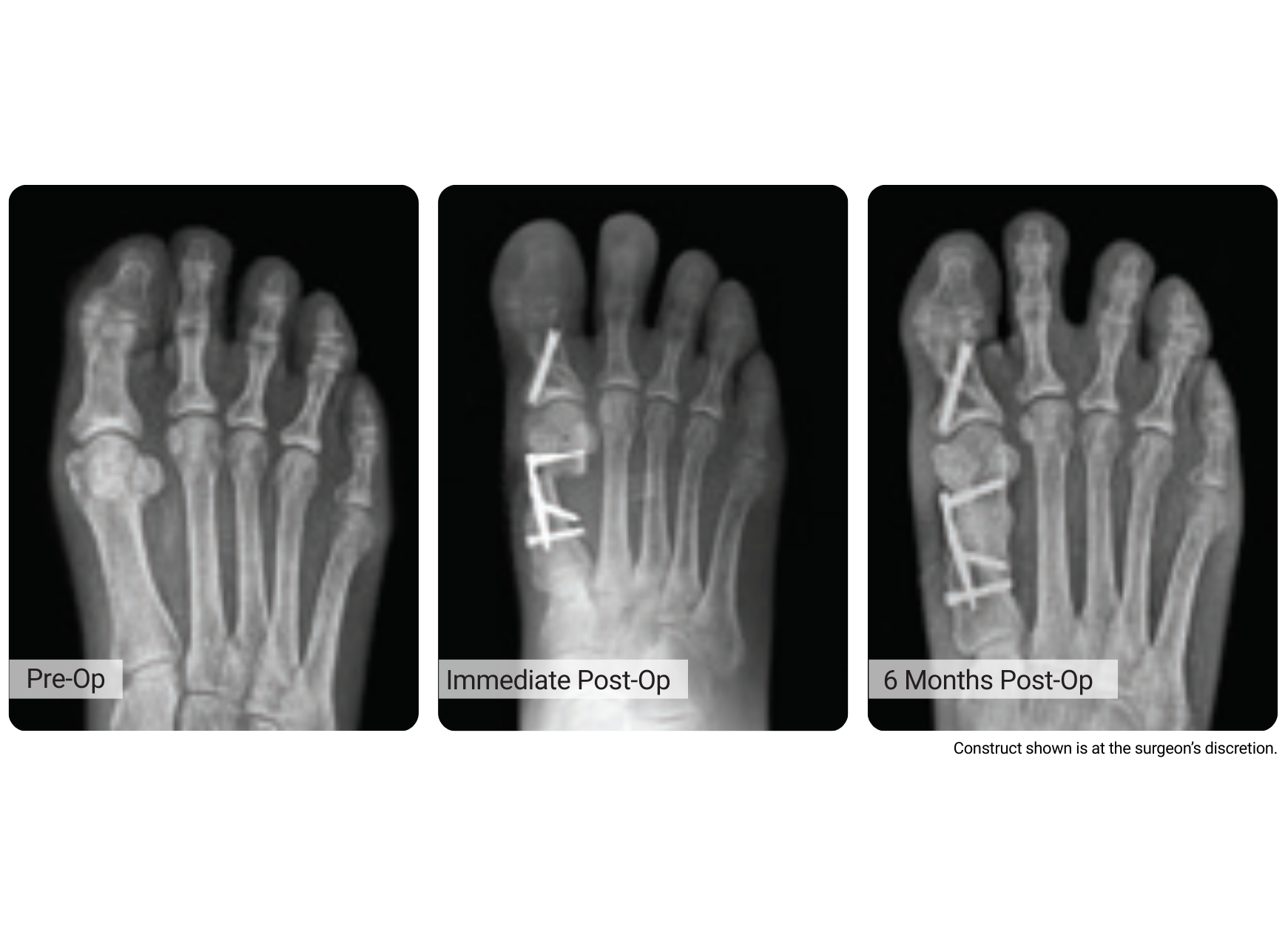
Nanoplasty® is the only fully instrumented bunion correction procedure in the U.S. delivering a predictable, minimally invasive 3D correction through a discreet 1.5 cm incision. Its guided saw-cut technique allows for quick mastery, eliminating the steep learning curve of traditional MIS.
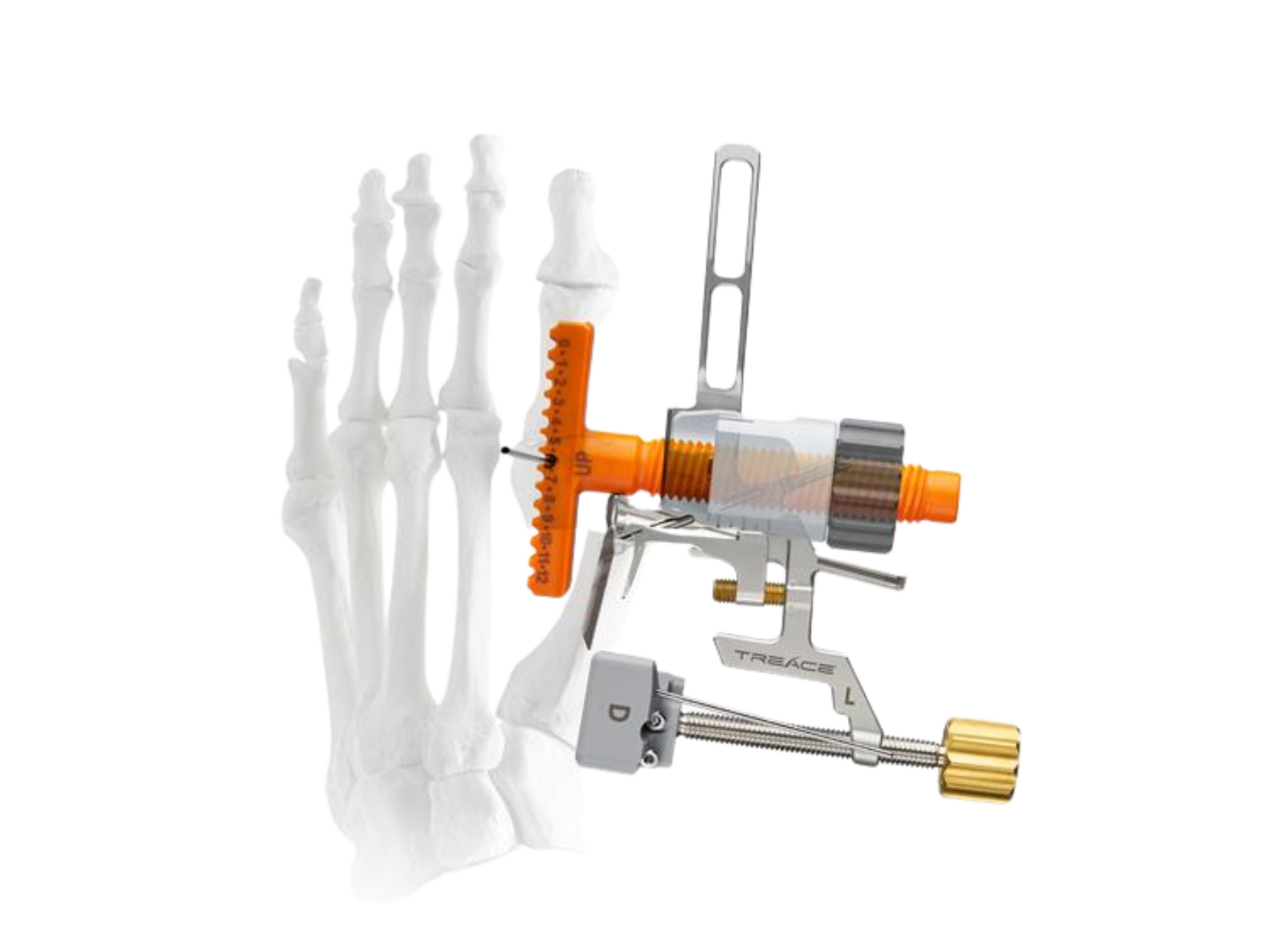
- Instrumented to dial in triplanar correction.
Intuitive instrumentation enables a reproducible and stable hands-free 3D correction. - Confidence with a guided saw cut.
MIS-compatible cut guide for a fast and precise bunion osteotomy — without the burr. - Predictable strength of locking fixation.
Ultra-low-profile plating system designed to support early weight bearing and foot width reduction.1
Percuplasty®
Percutaneous 3D Bunion Correction

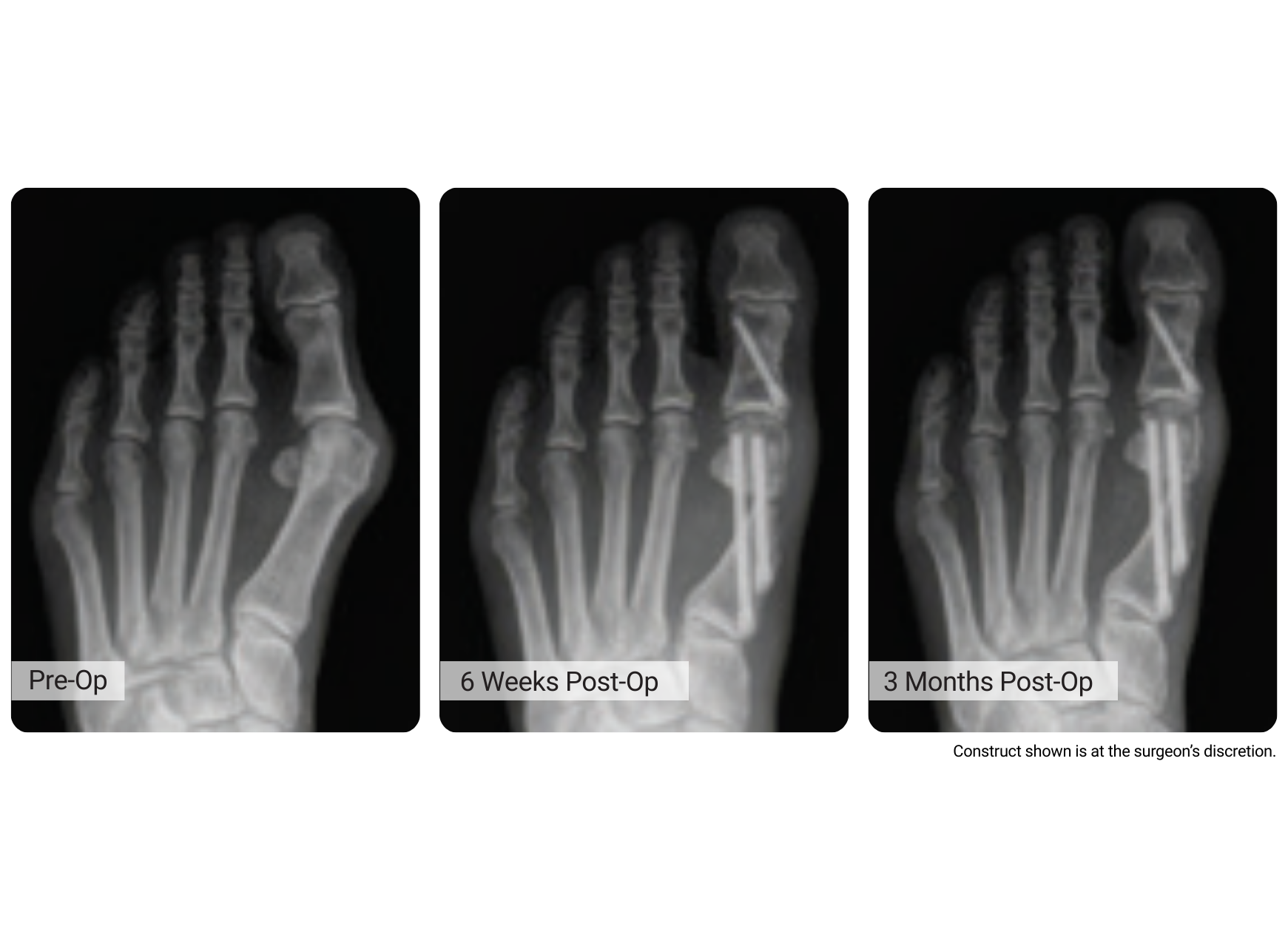
Designed to address traditional challenges of percutaneous bunion surgery by enabling greater speed, efficiency, and precision.
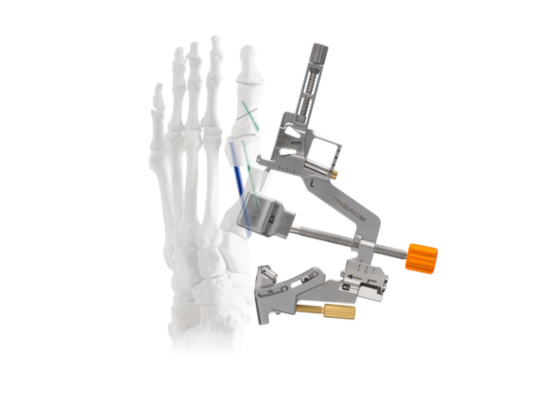
- Precise hands-free 3D correction and targeting.
Ultra-low-profile jig allows optimal visualization of the metatarsal in the lateral x-ray, dialing in triplanar correction, and accurate wire placement. - Throw wires without skiving.
Robust 1.4 and 1.6 mm cobalt chrome wires with a laser-sharp tip are designed to reduce skiving. - Rapid screw insertion.
Self-drilling beveled screws simplify the workflow and save valuable time in the OR.
Treace Talk
Hear what surgeons are saying about MIS bunion surgery.
Got Questions?
For more information or to get trained on Treace’s comprehensive 3D Bunion Correction® systems, give us a call or complete the form.
*Based on surgeon experience
1. TMC Data on File
M4339B